Thursday, January 29, 2026

Combine Harvester Price List 2026

 The agricultural landscape is continuously evolving, with mechanization at its core. For farmers and agri-businesses planning investments in 2026, understanding the cost of harvesting equipment is crucial for budgeting and ROI calculations. The combine harvester price spectrum is broader than ever, catering to diverse farm sizes, crop types, and budgetary constraints. This comprehensive guide breaks down the anticipated harvester machine price trends for 2026, focusing on key models and markets, including the critical combine harvester price in India.


Understanding the 2026 Price Spectrum: Factors at Play

Before diving into specific figures, it's essential to grasp the variables influencing harvester price in 2026. Inflation, raw material costs (especially steel), and global supply chain stability remain foundational factors. However, technological integration is a significant new driver. Precision farming features, GPS-guided automation, advanced telematics for predictive maintenance, and AI-powered yield monitoring are becoming standard, adding to the base combine harvester machine price. Furthermore, stringent emission norms (like CE Stage V and Bharat Stage (BS) in India) for diesel engines increase manufacturing costs. Regional demand, import duties, and local manufacturing capacity will also create price disparities across markets.


The Global and Indian Market Context

The combine harvester price in India represents one of the world's most dynamic and price-sensitive markets. India's unique farming structure, dominated by small and marginal landholdings, has fueled demand for versatile and smaller machines. Consequently, the paddy harvesting machine price and rice harvesting machine price are among the most searched terms, given that rice is a staple crop. International giants and domestic manufacturers compete fiercely, offering a range from mini harvesters to large axial-flow machines. The government's subsidy schemes under various agricultural mechanization missions can significantly alter the effective price for farmers, making net cost as important as the ex-showroom harvester machine price.


Category-Wise Price Breakdown for 2026

1. Mini & Tractor-Mounted Harvesters: The Entry Point

Ideal for small farms, hilly terrain, and selective harvesting, mini harvesters have seen explosive growth.

  • Mini Harvester Price (2026): The entry-level mini harvester price for a basic 3-4 HP paddy harvester is expected to range between $8,000 and $15,000. More robust models with 15-25 HP engines and enhanced features may cost $18,000 to $30,000.

  • Key Model - Kubota: Renowned for reliability, the Kubota harvester price for popular mini and compact models like the Kubota DC/DS series is projected to be in the premium bracket of $25,000 to $45,000, justified by superior engine technology and build quality.

  • Key Model - Kartar: A major Indian player, Kartar harvester price points are highly competitive. Their tractor-mounted and mini combine models are anticipated to be very accessible, with a paddy harvesting machine price starting from approximately $10,000 to $22,000, making them a dominant force in the value segment.


2. Self-Propelled Combine Harvesters: The Mainstream Workhorses

This category serves medium to large farms and is the standard for grain harvesting.

  • Standard Combine Harvester Price (2026): For a standard 100-150 HP combine with a 4-5 meter cutter bar, the combine harvester price is forecast to start from $80,000 and can extend to $180,000 for advanced models with luxury cabs and automation.

  • Rice Specialized Models: Given the specific requirements of wet paddy fields, a dedicated rice harvesting machine price often includes features like rubber tracks and special separators. These models command a premium, with prices likely between $100,000 and $250,000.

  • The Indian Benchmark: The combine harvester price in India for a popular 75-90 HP model from domestic manufacturers (like Dasmesh, Preet, John Deere India) might range from $65,000 to $120,000. The effective price post-subsidy could be 20-40% lower, a critical consideration.


3. High-Capacity & Axial Flow Harvesters: The Elite Fleet

For agri-corporations and contractors servicing vast plains, high-capacity harvesters offer unmatched efficiency.

  • Price Range: The combine harvester machine price for elite series from brands like John Deere, Case IH, and New Holland (200+ HP) will comfortably exceed $300,000, with top-tier models reaching $600,000+ in 2026. These giants feature the largest grain tanks, most powerful engines, and the pinnacle of harvesting technology.


Detailed Model Spotlight: Kubota vs. Kartar in 2026

Kubota Harvester Price & Proposition:
Kubota stands for premium engineering and fuel efficiency. In 2026, their focus will be on enhancing operator comfort and digital integration. The Kubota harvester price reflects this positioning. For example, a Kubota PRO series combine in India may be priced 15-25% higher than a similar horsepower domestic model. However, its resale value and performance in challenging conditions (like wet paddy) often justify the investment. The rice harvesting machine price for a Kubota with full-track options will be at the higher end of its category.

Kartar Harvester Price & Proposition:
Kartar thrives on understanding the grassroots needs of the Indian farmer. Their strength lies in offering rugged, practical machines at a compelling Kartar harvester price. They excel in the tractor-mounted and small self-propelled segments, providing an affordable mechanization solution. In 2026, expect Kartar to integrate more basic telematics and operator-friendly features while maintaining its competitive paddy harvesting machine price, potentially starting as low as $9,500 for the most basic reaper-binder models.


Strategic Buying Advice for 2026

  1. Look Beyond Sticker Price: The initial harvester price is just one component. Calculate total cost of ownership (TCO), which includes fuel consumption (critical in 2026), maintenance costs, part availability, and anticipated resale value.

  2. Match Machine to Crop and Acreage: There is no one-size-fits-all. A mini harvester price might be perfect for a 10-acre paddy farm, while a 500-acre wheat farm needs a high-capacity combine. Don't over-invest or under-invest in capacity.

  3. Prioritize After-Sales Service: A machine's value is tied to its support network. Ensure the manufacturer has a strong service network and parts supply chain in your region.

  4. Explore Financing and Subsidies: Utilize government schemes. The net combine harvester price in India after subsidy can dramatically change your financial model. Explore custom hiring center models to share capital costs.

  5. Technology as an Investment: While features like auto-steer and yield mapping increase the combine harvester machine price, they are investments in precision, reducing waste and optimizing inputs for higher long-term profitability.


Conclusion: An Investment in Future Harvests

The harvester machine price list for 2026 reflects an industry in transition—balancing cost pressures with the imperative of technological advancement. From the accessible mini harvester price to the premium Kubota harvester price, and the value-focused Kartar harvester price, the market offers solutions for every farmer. The key for buyers in 2026 will be to conduct a thorough needs analysis, scrutinize the TCO, and strategically leverage subsidies. Whether evaluating a paddy harvesting machine price in Punjab or a rice harvesting machine price in Southeast Asia, the right combine is not merely an expense; it is a strategic investment that will define harvesting efficiency and profitability for the next decade.

Wednesday, June 11, 2025

Rice Transplanter Machines: Uses & Benefits for Paddy Farming

Paddy farming, a staple agricultural practice in many parts of the world, has seen significant advancements with the introduction of rice transplanter machines. These machines have revolutionized the way rice is planted, making the process more efficient, cost-effective, and less labor-intensive. In this blog, we will explore the uses and benefits of rice transplanters, their types, and the prices associated with them, particularly focusing on popular brands like Kubota and Mahindra.


What is a Rice Transplanter?

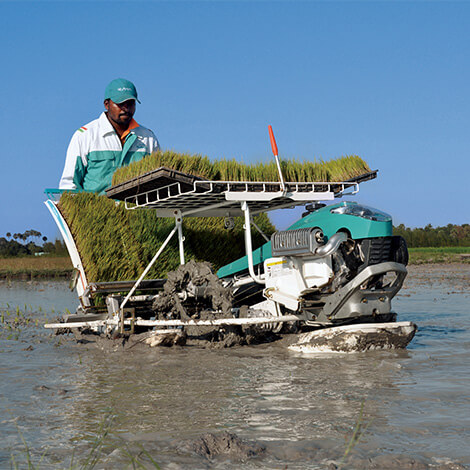
A rice transplanter is a specialized agricultural machine designed to plant young rice seedlings into paddy fields. Unlike traditional manual methods, which involve a lot of physical labor and time, a rice transplanter can significantly reduce the planting time and improve the uniformity of the crop. This, in turn, leads to better yields and higher profits for farmers.

Types of Rice Transplanters

There are two main types of rice transplanters: manual rice transplanters and mechanized or automatic rice transplanters.

  • Manual Rice Transplanters: These are simpler and more affordable options, often used by small-scale farmers. They require human effort to operate but are still more efficient than traditional hand-planting methods. The manual rice transplanter price in India can vary depending on the model and brand, but they are generally more budget-friendly compared to their mechanized counterparts.

  • Mechanized Rice Transplanters: These are more advanced and can be operated with minimal human intervention. They are ideal for large-scale farming and can cover a significant area in a short amount of time. Popular brands include Kubota and Mahindra, which offer a range of models to suit different needs and budgets.


Benefits of Using a Rice Transplanter Machine

  1. Increased Efficiency: A rice transplanter machine can plant up to 10 times faster than manual methods, allowing farmers to cover more ground in less time.
  2. Uniform Planting: Mechanized transplanters ensure that the seedlings are planted at consistent depths and distances, leading to a more uniform and healthy crop.
  3. Reduced Labor Costs: By automating the planting process, rice transplanter machines significantly reduce the need for manual labor, saving farmers both time and money.
  4. Improved Yields: The uniform planting and reduced stress on the seedlings lead to better growth and higher yields, ultimately increasing the profitability of the farm.
  5. Conservation of Resources: Mechanized transplanters can help conserve water and other resources by ensuring that the seedlings are planted in the most optimal conditions.

Popular Brands and Models

  • Kubota Rice Transplanter: Kubota is a well-known brand in the agricultural machinery sector, offering a range of high-quality rice transplanter models. The Kubota rice transplanter price in India can vary depending on the model and features, but they are known for their durability and efficiency. For example, a 4 row rice transplanter price for a Kubota model can range from INR 1,50,000 to INR 3,00,000, depending on the specific model and features.

  • Mahindra Rice Transplanter: Mahindra is another popular brand in India, known for its reliable and cost-effective agricultural machinery. The Mahindra rice transplanter price in India is generally more affordable compared to Kubota, making it a popular choice among small and medium-scale farmers. A 4 row manual rice transplanter from Mahindra can cost around INR 80,000 to INR 1,20,000, depending on the model and features.


Price Considerations

The rice transplanter price can vary significantly based on several factors, including the brand, model, features, and the region where you are purchasing the machine. Here are some general price ranges for different types of rice transplanters in India:

  • Kubota Rice Transplanter Price in India:

    • 4 Row Rice Transplanter Price: INR 1,50,000 to INR 3,00,000
    • Kubota Rice Transplanter Machine Price: INR 2,00,000 to INR 4,00,000
  • Mahindra Rice Transplanter Price in India:

    • 4 Row Manual Rice Transplanter: INR 80,000 to INR 1,20,000
    • Mahindra Rice Transplanter Machine Price: INR 1,00,000 to INR 2,50,000
  • Manual Rice Transplanter Price in India:

    • 4 Row Manual Rice Transplanter: INR 50,000 to INR 1,00,000
  • Rice Transplanter Machine Price in Odisha:

    • Prices in Odisha can vary slightly due to regional factors, but generally, the rice transplanter machine price in Odisha falls within the same range as the national average.


Choosing the Right Rice Transplanter

When choosing a rice transplanter, it's important to consider your specific needs and budget. Here are some key factors to keep in mind:

  1. Field Size: If you have a large field, a mechanized rice transplanter like those from Kubota or Mahindra would be more suitable. For smaller fields, a manual rice transplanter might be a more cost-effective option.
  2. Budget: Determine how much you are willing to spend on a rice transplanter. While mechanized models are more expensive, they offer long-term savings in terms of labor costs and increased productivity.
  3. Features: Look for features that are important to you, such as the number of rows, ease of operation, and durability. Some models may also come with additional features like GPS guidance and adjustable planting depth.
  4. Brand Reputation: Choose a reputable brand like Kubota or Mahindra, which are known for their quality and customer support.


Conclusion

In conclusion, rice transplanter machines are a valuable investment for any paddy farmer looking to increase efficiency, reduce labor costs, and improve yields. Whether you opt for a manual rice transplanter or a more advanced mechanized model, the benefits are clear. With a wide range of options available from trusted brands like Kubota and Mahindra, and a variety of price points to suit different budgets, there is a rice transplanter to meet every farmer's needs. By making an informed decision and choosing the right rice transplanter, you can take your paddy farming to the next level and enjoy the many benefits that these machines have to offer.


Thursday, June 5, 2025

The Best Paddy Harvester Machine in India

 Agriculture is the backbone of the Indian economy, and paddy (rice) is one of the most important crops cultivated in the country. The process of harvesting paddy has evolved significantly over the years, with the introduction of advanced machinery making the task more efficient and less labor-intensive. In this blog, we will explore the best paddy harvester machines available in India, their features, and the factors to consider when choosing the right one for your needs.

Understanding Paddy Harvesting Machines

Paddy harvesting machines, also known as paddy harvesting machine or rice combine harvester, are designed to automate the process of cutting, threshing, and cleaning paddy. These machines can significantly reduce the time and effort required for harvesting, making them a valuable investment for farmers. The rice harvester not only cuts the paddy but also separates the grains from the stalks, thereby streamlining the entire harvesting process.


Types of Paddy Harvesters

There are several types of paddy harvesters available in the market, each with its own set of features and benefits. Some of the most common types include:

  1. Combine Harvester: A combine harvester is a versatile machine that performs multiple tasks, including cutting, threshing, and cleaning. It is highly efficient and can handle large areas of paddy fields. The combine harvester price in India varies depending on the brand, model, and features, but it generally ranges from INR 20 lakhs to INR 50 lakhs.

  2. Chain Harvester: A chain harvester is a simpler and more affordable option compared to a combine harvester. It is primarily used for cutting the paddy and does not perform the additional tasks of threshing and cleaning. The chain harvester price in India typically ranges from INR 5 lakhs to INR 15 lakhs.

  3. Reaper-Binder: A reaper-binder is another type of paddy harvester that cuts the paddy and binds the stalks into bundles. This machine is useful for small-scale farmers who prefer to manually thresh and clean the paddy.


Top Brands in the Indian Market

Several brands offer high-quality paddy harvester machines in India. Here are some of the top brands and their popular models:

  1. Mahindra Harvester: Mahindra is a well-known name in the Indian agricultural machinery market. Their Mahindra harvester models, such as the Mahindra rice harvester and Mahindra chain harvester, are highly regarded for their durability and efficiency. The Mahindra chain harvester is particularly popular among small and medium-scale farmers due to its affordability and ease of use.

  2. John Deere: John Deere is a global leader in agricultural machinery and offers a range of combine harvester machines suitable for paddy harvesting. Their machines are known for their advanced technology and high performance.

  3. Claas: Claas is another reputable brand that provides high-quality combine harvester machines. Their models are designed to handle large areas and are equipped with state-of-the-art features for optimal performance.

  4. Sonalika: Sonalika is a leading Indian tractor manufacturer that also produces paddy harvester machines. Their machines are known for their robust build and reliable performance.

Factors to Consider When Choosing a Paddy Harvester

When selecting a paddy harvester machine, there are several factors to consider to ensure you make the right choice:

  1. Field Size: The size of your paddy field is a crucial factor. For large fields, a combine harvester is the best option, while for smaller fields, a chain harvester or reaper-binder may be more suitable.

  2. Budget: The cost of the machine is an important consideration. While a combine harvester offers more features and higher efficiency, it is also more expensive. A chain harvester is a more budget-friendly option.

  3. Ease of Use: Consider the ease of operation and maintenance of the machine. Some models may require more technical expertise to operate and maintain, which could be a challenge for some farmers.

  4. Brand Reputation: Choose a reputable brand with a good track record of customer service and support. This ensures that you can get timely assistance and spare parts if needed.

  5. Features and Technology: Look for machines with advanced features and technology, such as GPS guidance, automatic steering, and real-time monitoring systems. These features can enhance the efficiency and productivity of the harvesting process.


Conclusion

Investing in a paddy harvester machine can significantly improve the efficiency and productivity of your paddy farming operations. Whether you choose a combine harvester or a chain harvester, it is essential to consider your specific needs and budget. Top brands like Mahindra harvester and John Deere offer a range of high-quality machines that cater to different requirements. By carefully evaluating the factors mentioned above, you can select the best harvester in India that meets your needs and helps you achieve better yields and profitability.

For more information on harvester combine price and harvesting combine price, you can visit the official websites of the respective brands or consult with local dealers. Remember, the right paddy cutting machine can make a significant difference in your farming operations, so choose wisely!

Thursday, May 29, 2025

Top 5 Mini Tractor Brands in India

 India’s agricultural sector is increasingly adopting compact and efficient farming solutions, and mini tractors have become a game-changer for small and marginal farmers. These mini agriculture tractors offer power, affordability, and versatility, making them ideal for various farming tasks.

In this blog, we will explore the top 5 mini tractor brands in India, along with their features, performance, and mini tractor price in India. Whether you're looking for the best small tractor or checking out mini tractors for sale, this guide will help you make an informed decision.


1. Mahindra Mini Tractor – Power and Reliability

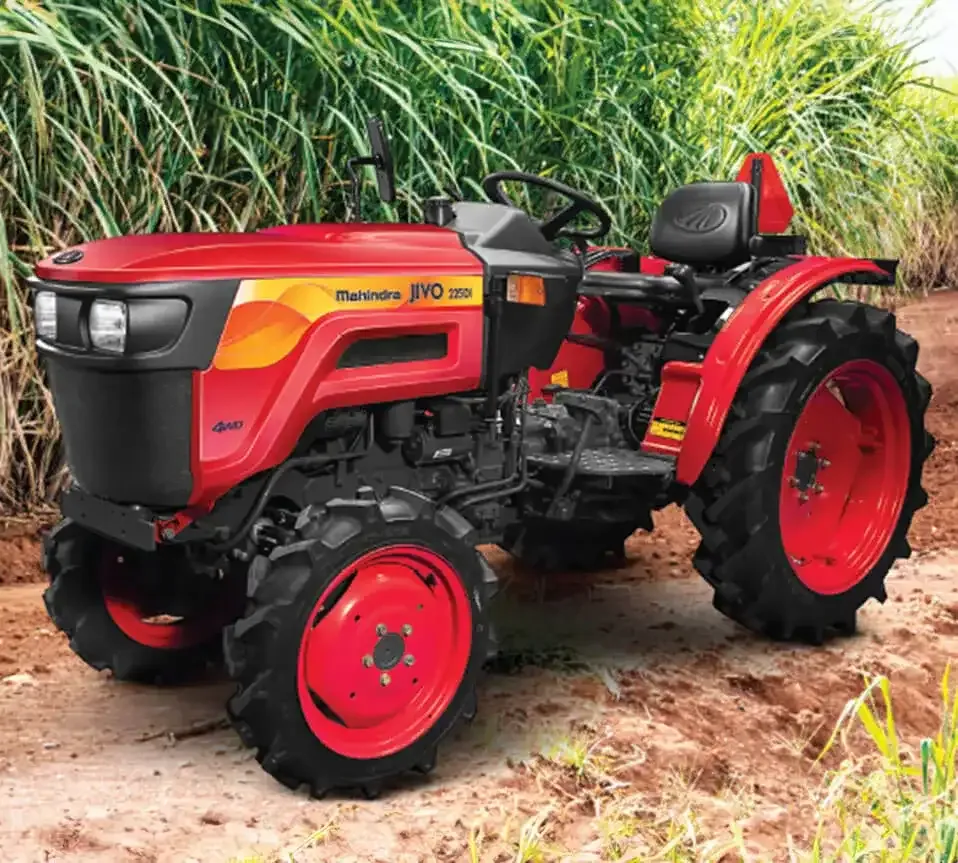
Mahindra is one of India’s leading tractor brands, known for its durable and high-performance machines. The Mahindra mini tractor series is designed for small farms, orchards, and horticulture.

Key Features:

  • Engine power: 15 HP to 25 HP

  • Fuel-efficient diesel engines

  • Excellent ground clearance for rough terrains

  • Low maintenance costs

Mahindra Mini Tractor Price:

  • Mahindra Jivo 245 DI – ₹3.5 Lakh to ₹4.5 Lakh

  • Mahindra Yuvraj 215 NXT – ₹2.8 Lakh to ₹3.5 Lakh

Why Buy?
✔ Trusted brand with strong service network
✔ Ideal for small farms and vegetable cultivation


2. Swaraj Mini Tractor – Affordable and Efficient

Swaraj, a subsidiary of Mahindra, offers budget-friendly yet powerful Swaraj mini tractor models. These tractors are perfect for farmers looking for a low-cost but reliable option.

Key Features:

  • 15 HP to 20 HP engines

  • Compact design for easy maneuverability

  • Suitable for light to medium farming tasks

Swaraj Mini Tractor Price:

  • Swaraj 724 XM – ₹3.2 Lakh to ₹4.0 Lakh

  • Swaraj 855 FE – ₹4.5 Lakh to ₹5.5 Lakh

Why Buy?
✔ Affordable mini farm tractor price
✔ Good resale value


3. Sonalika Mini Tractor – High Performance at Low Cost

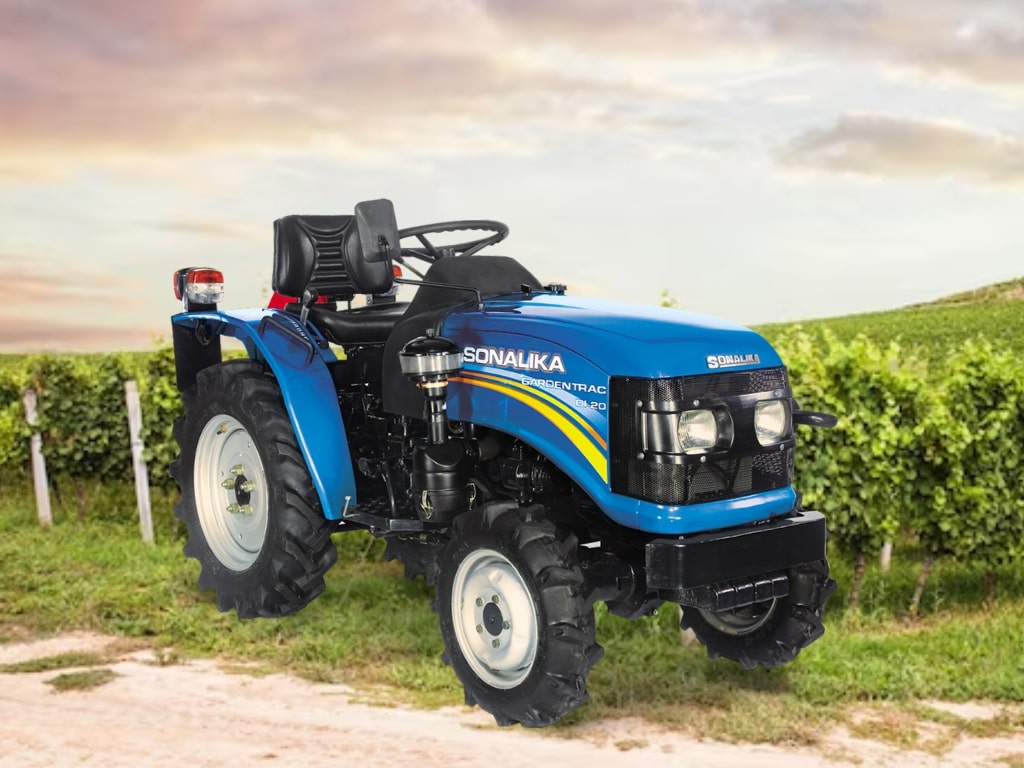
Sonalika is another popular brand offering cost-effective mini farm tractors with excellent performance.

Key Features:

  • 18 HP to 25 HP engines

  • Ergonomic design for operator comfort

  • Low fuel consumption

Sonalika Mini Tractor Price:

  • Sonalika GT 20 – ₹3.0 Lakh to ₹3.8 Lakh

  • Sonalika Tiger 26 – ₹4.2 Lakh to ₹5.0 Lakh

Why Buy?
✔ Budget-friendly with high efficiency
✔ Good for orchard and vineyard farming


4. Kubota Mini Tractor – Advanced Japanese Technology

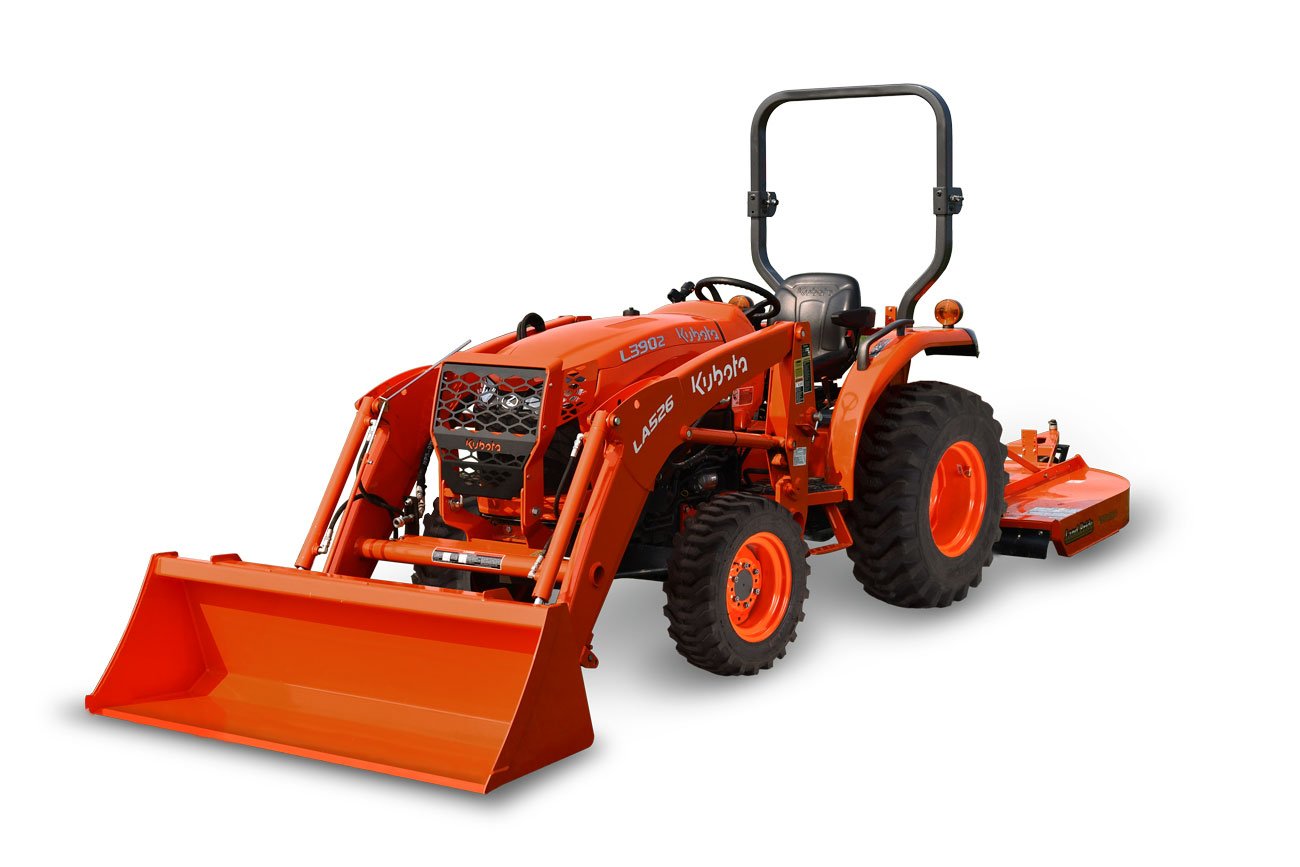
Kubota is a global leader in compact tractors, known for its superior engineering. The Kubota mini tractor range is ideal for precision farming.

Key Features:

  • 21 HP to 30 HP engines

  • Advanced hydraulics for smooth operation

  • Low vibration and noise levels

Mini Kubota Tractor Price:

  • Kubota Neostar B2441 – ₹5.5 Lakh to ₹6.5 Lakh

  • Kubota MU4501 – ₹6.8 Lakh to ₹7.5 Lakh

Why Buy?
✔ Premium build quality
✔ Best for high-yield farming


5. John Deere Mini Tractor – Smart Farming Solutions

John Deere is synonymous with innovation, and their mini tractors come with smart features for modern farming.

Key Features:

  • 20 HP to 35 HP engines

  • Digital dashboard for easy monitoring

  • Excellent after-sales support

John Deere Mini Tractor Price:

  • John Deere 3028 EN – ₹6.0 Lakh to ₹7.0 Lakh

  • John Deere 5036 D – ₹8.5 Lakh to ₹9.5 Lakh

Why Buy?
✔ Advanced technology for precision farming
✔ Reliable brand with global reputation


Factors to Consider Before Buying a Mini Tractor

  1. Engine Power (HP) – Choose based on your farming needs (15-30 HP is ideal for small farms).

  2. Fuel Efficiency – Diesel engines are more cost-effective in the long run.

  3. Price & Budget – Compare mini tractor price in India before purchasing.

  4. After-Sales Service – Check dealer support in your area.

  5. Attachments & Implements – Ensure compatibility with ploughs, harvesters, etc.


Where to Find Mini Tractors for Sale?

  • Online Marketplaces: TractorJunction, OLX, IndiaMART

  • Authorized Dealers: Visit local Mahindra, Swaraj, or Kubota showrooms

  • Government Subsidies: Check state agricultural schemes for discounts


Final Verdict: Which is the Best Small Tractor?

BrandBest ForPrice Range (₹)
MahindraReliability & Service2.8L - 4.5L
SwarajBudget Buyers3.2L - 5.5L
SonalikaCost-Effective Farming3.0L - 5.0L
KubotaHigh-Tech Farming5.5L - 7.5L
John DeerePremium Performance6.0L - 9.5L

Conclusion

If you need a mini farm tractor for sale, consider your budget, farm size, and required features. Mahindra and Swaraj offer great value for money, while Kubota and John Deere are ideal for tech-savvy farmers.

Before finalizing, compare mini tractor prices, read customer reviews, and take a test drive. A well-chosen mini agriculture tractor can boost productivity and make farming more profitable!

Wednesday, May 21, 2025

Efficient Rice Planting Machine for Farming In India

India, a country with a rich agricultural heritage, is one of the world's largest producers and consumers of rice. The cultivation of rice, or paddy, is a significant part of the Indian agricultural landscape, contributing to both the economy and food security. However, traditional methods of rice planting, such as manual transplanting, are labor-intensive and time-consuming. This has led to the increasing adoption of rice planting machines and rice transplanters in recent years. These machines not only enhance efficiency but also reduce the dependency on manual labor, making them a valuable asset for modern farming practices.

The Need for Mechanization in Rice Cultivation

Rice cultivation in India faces several challenges, including the need for timely planting, efficient use of water, and the availability of labor. Traditional methods, such as broadcasting seeds or manual transplanting, are often inefficient and can lead to lower yields. Moreover, the availability of skilled labor is becoming a growing concern, especially during peak planting seasons. This is where paddy plantation machines and rice transplanting machines come into play. These machines offer a solution by automating the planting process, ensuring uniformity, and reducing the overall time and effort required.


Types of Rice Planting Machines

There are various types of rice planting machines available in the market, each designed to meet specific needs and conditions. Some of the most common types include:

  1. Rice Transplanter: A rice transplanter is a machine that plants pre-germinated seedlings into the field. It is particularly useful for areas where the land is prepared and leveled. The rice transplanter can be either manually operated or fully automatic, depending on the model.

  2. Paddy Planting Machine: A paddy planting machine is designed to plant rice seeds directly into the soil. This type of machine is ideal for direct-seeded rice (DSR) cultivation, which is gaining popularity due to its water-saving benefits.

  3. Automatic Rice Transplanter: An automatic rice transplanter is a more advanced version of the rice transplanter. It is equipped with sensors and GPS technology to ensure precise and uniform planting. This machine is highly efficient and can cover large areas in a short amount of time.

  4. Paddy Transplanter Machine: Similar to the rice transplanter, a paddy transplanter machine is specifically designed for transplanting rice seedlings. It is suitable for both wetland and dryland conditions and can be used in a variety of soil types.

  5. Paddy Rice Transplanter: A paddy rice transplanter is another term for a rice transplanter. It is designed to handle the specific requirements of paddy fields, such as the need for even spacing and depth.

  6. Paddy Sowing Machine: A paddy sowing machine is used for direct seeding of rice. It is a versatile machine that can be used for other crops as well, making it a cost-effective option for farmers.


Benefits of Using Rice Planting Machines

The adoption of rice planting machines and rice transplanters offers several benefits to farmers, including:

  • Increased Efficiency: Rice planting machines can cover large areas in a short amount of time, significantly reducing the time required for planting. This allows farmers to complete the planting process within the optimal window, leading to better yields.

  • Uniform Planting: These machines ensure uniform spacing and depth, which is crucial for the healthy growth of rice plants. Uniform planting leads to better root development and reduces competition for nutrients and water.

  • Reduced Labor Dependency: With the use of rice planting machines, the need for manual labor is greatly reduced. This is particularly beneficial during peak planting seasons when labor is scarce and expensive.

  • Cost Savings: While the initial investment in a rice planting machine may be high, the long-term cost savings are significant. Reduced labor costs, increased efficiency, and higher yields all contribute to a better return on investment.

  • Water Conservation: Direct-seeded rice (DSR) using paddy sowing machines can help conserve water. DSR requires less water compared to traditional transplanting methods, making it an environmentally friendly option.


Choosing the Right Rice Planting Machine

Selecting the right rice planting machine depends on several factors, including the size of the farm, the type of rice being cultivated, and the specific conditions of the field. Here are some key considerations to keep in mind:

  • Field Conditions: The type of soil, the level of the field, and the availability of water are important factors. For example, a rice transplanter is more suitable for well-leveled and irrigated fields, while a paddy sowing machine is better for direct-seeded rice in drier conditions.

  • Farm Size: The size of the farm will determine the type of machine needed. Small-scale farmers may opt for a manual rice transplanter, while large-scale farmers may require a fully automatic rice transplanter.

  • Budget: The cost of the machine is a critical factor. While automatic rice transplanters offer the highest efficiency, they are also the most expensive. Farmers should consider their budget and long-term financial goals when making a decision.

  • Maintenance and Support: Regular maintenance is essential for the longevity and performance of the machine. It is important to choose a machine from a reputable manufacturer that offers good after-sales support and easy access to spare parts.


Popular Brands and Models in India

Several manufacturers offer a range of rice planting machines and rice transplanters in India. Some of the popular brands and models include:

  • Kubota: Kubota is a well-known brand in the agricultural machinery sector. Their rice transplanters are known for their reliability and efficiency. The Kubota SR-700 and SR-800 are popular models among Indian farmers.

  • Yanmar: Yanmar is another trusted brand that offers a range of rice transplanters. The Yanmar YT series, including the YT505 and YT515, are widely used in India for their robust design and ease of operation.

  • VST Shakti: VST Shakti is an Indian company that produces affordable and reliable rice transplanters. Their models, such as the VST 955 and VST 1055, are designed to meet the specific needs of Indian farmers.

  • Mahindra: Mahindra, a leading Indian tractor manufacturer, also offers rice transplanters. The Mahindra RT 40 and RT 50 are popular choices for their durability and performance.

  • Sonalika: Sonalika is another Indian brand that provides a range of rice transplanters. The Sonalika DI 745 III and DI 755 III are known for their versatility and efficiency.


Paddy Plantation Machine Price in India

The price of a paddy plantation machine in India can vary depending on the brand, model, and features. On average, a rice transplanter can cost anywhere from INR 2.5 lakhs to INR 10 lakhs. The paddy sowing machine and paddy planter machine prices are generally lower, ranging from INR 1 lakh to INR 5 lakhs. It is important to note that the cost of the machine is just one aspect; farmers should also consider the long-term benefits and potential return on investment.

Government Initiatives and Subsidies

The Indian government has recognized the importance of mechanization in agriculture and has introduced several initiatives and subsidies to promote the adoption of rice planting machines and rice transplanters. The Pradhan Mantri Fasal Bima Yojana (PMFBY) and Pradhan Mantri Krishi Sinchai Yojana (PMKSY) are two major schemes that provide financial support to farmers. Additionally, state governments also offer subsidies on the purchase of agricultural machinery, making it more affordable for farmers to invest in these technologies.


Case Studies: Success Stories

Several farmers in India have successfully adopted rice planting machines and rice transplanters and have seen significant improvements in their yields and efficiency. For example, a farmer in Punjab, who switched from manual transplanting to a Kubota SR-700 rice transplanter, reported a 20% increase in yield and a 30% reduction in labor costs. Similarly, a farmer in Andhra Pradesh, who used a VST 955 rice transplanter, was able to complete the planting process in half the time and with fewer workers.

Future Trends and Innovations

The future of rice planting machines and rice transplanters looks promising, with ongoing innovations and advancements. Some of the emerging trends include:

  • Precision Agriculture: The integration of GPS and sensor technology in rice transplanters is enabling precision agriculture. This allows for more accurate and efficient planting, leading to higher yields and better resource management.

  • Electric and Hybrid Machines: There is a growing trend towards electric and hybrid rice planting machines. These machines are more environmentally friendly and offer lower operating costs, making them an attractive option for farmers.

  • Automated Systems: Fully automated systems, such as autonomous rice transplanters, are being developed. These systems use AI and robotics to perform the entire planting process without human intervention, further enhancing efficiency and reducing labor dependency.


Conclusion

The adoption of rice planting machines and rice transplanters is a significant step towards modernizing Indian agriculture. These machines offer numerous benefits, including increased efficiency, uniform planting, reduced labor dependency, and cost savings. With the support of government initiatives and the availability of various models and brands, farmers in India have a wide range of options to choose from. As the demand for mechanization continues to grow, the future of rice cultivation in India looks bright, with the potential for even greater productivity and sustainability.

Combine Harvester Price List 2026

  The agricultural landscape is continuously evolving, with mechanization at its core. For farmers and agri-businesses planning investment...